[For more context, you may choose to read “Reindigenizing, Part I,” “Reindigenizing, Part II,” and “Korean in Hawai`i”]
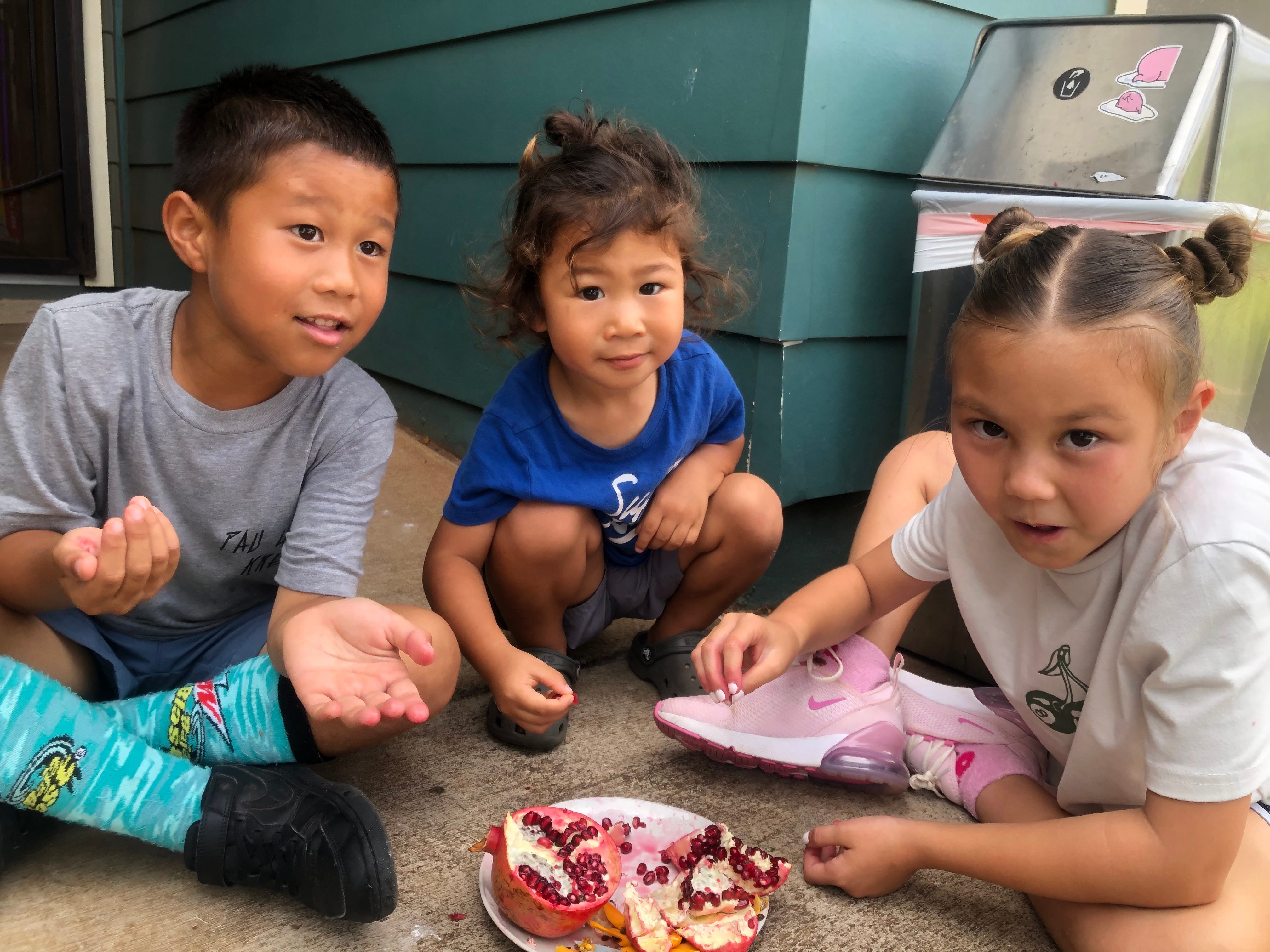
As I was viewing the newly released “In the Circle of Life” film by Zaya and Maurizio Benazzo of Science and Nonduality, I was struck by the different faces of indigeneity on the continent of Australia. Like indigeneity all over the world, superficial markers of appearance have changed. In 2026, we can no longer claim: people native to ______ look like this: _______. It’s simply not true. For instance, many people of Australian aboriginal heritage have lighter skin than their native ancestors, and facial features that look European. Similarly, in the United States, many people who could pass as white actually identify as Black, or Asian, or another racial identity. Here in Hawai`i, it’s possible to meet someone you would assume is white or Asian or Black or another racial identity, then learn they are Hawaiian. People who are indigenous to their land can look almost any way.
Over decades and centuries, we and our ancestors have experienced trafficking, rape, abuse, forced or arranged marriages, and voluntary and involuntary migration. We and our ancestors may have chosen to partner with people from different parts of the world or different racial backgrounds. These may be “love marriages,” or green card marriages, or health insurance-motivated marriages, or shotgun marriages, or any combinations of these or other conditions. Their partnerships may arise from love, lust, or necessity. Our attractions and desires cannot help but be influenced by colonization and globalization, whether we realize it or admit it or not. Outside of marriage, people always have and will always continue to hook up. Whatever the reasons and motivations may be, we look around most communities, and note that racial purity may not actually exist.
When people of mixed heritage are invited to racially identify themselves, some choose to center an indigenous identity. Almost every kanaka māoli I’ve met has a parent or grandparent who is Filipinx, Chinese, Japanese, Portuguese, Korean, Puerto Rican—usually some combination. Yet, they choose to proudly identify as kanaka. They feel Hawaiian, they live in Hawai`i, usually they know some or a lot of the Hawaiian language, and they identify strongly with Hawaiian culture, history, and often politics.
One result of this pluralization of indigenous heritage is wider access to indigeneity in general. Colonization absolutely decimated the native population of Hawai`i with widespread disease. But when more people of mixed heritage choose to center their native identity, the Hawaiian movement can actually grow, amplify and gain more power. It’s an act of defiance: The colonizer thought intermarriage would strip native people of their culture and identity, making them easier to colonize. But now, generations later, their descendants reclaim their native power, reject colonizer systems, and teach their children and grandchildren native ways and languages.
Clearly, I am not kanaka. Nevertheless I identify strongly with the native culture, history, and politics here, and the kānaka community has graciously welcomed me with incredible aloha and generosity. I’m actively learning mele, hula, oli, and pule (songs, dances, chants, prayers) with so much gratitude. I’m also devoting myself to aloha `āina and lāhui, learning the land and community, while supporting the movements of demilitarization and sovereignty.
The most remarkable development is that Hawaiian practices are serving as a conduit for my own indigeneity to be revealed. I haven’t lived extensively in Korea since my early childhood, yet by calling upon the ancestors of the land here in Hawai`i, my own blood ancestors are being beckoned as well. I cannot yet explicate all their names and stories, but I feel them accompanying me, guiding me, supporting me. Indeed, the ancestors, all of them, are here for all of us.
Recently I had an experience with my grandchildren, at my granddaughter Coco’s soccer practice. She wanted me to sit under the tree, watching her, so that she could easily see me, and check in with me during water breaks. However I was also tending her younger brother, Solomon, who wanted to go to the nearby playground. I told Coco we would be near the tree, but not under it, and I would still be watching her. It struck me that that must be how our ancestors regard us. They are nearby, watching us, cheering us on, supporting us, even if we can’t quite spot them. They’re like the spectators at a soccer game, enthusiastically rooting for us, whether we acknowledge them or not. And guess what? My ancestors are cheering for everybody, not just me. And your ancestors also avail themselves to me, and others.
I believe we’re mistaken if we limit the ancestral realm to blood only. Instead, can we experience spirit as ineffable, accessible, both immediate and transcendent, and above all, inclusive and plural? I do believe I have special relations with certain ancestors, such as my mother, father, and brother. And yet, I don’t possess them nor have exclusive rights. May we not be limited by the myth of separateness and individuality, especially beyond the earthly realm.
At the same time, identifying with our ancestral earth-based heritage and practices doesn’t mean just peace and love and harmony. That would be spiritual bypassing. Choosing to identify with our own indigeneity also means taking on the responsibility of being indigenous. We must embrace responsibility to the land, to our elders, to our youth, and to our struggles. Without these commitments, we are simply extracting. All over the world indigenous people and cultures have been oppressed, silenced, shamed, and even obliterated. Those who choose to identify primarily with their colonizer lineage and ancestors may not feel a desire to be in solidarity with struggle. But if you feel the tug, a restless unease, a curiosity, an awakening…..that is a direct call from your indigenous ancestors.
To reindigenize, go to the land. Tend it. Talk to the beings of the land. What do they ask of you? Plant something. Forage. Lie down and feel how it is connected with the rest of the planet.
Go to the waters, fresh or salty. Immerse yourself, cleanse yourself. Listen to it, observe it. Feel how the water is eternal and constantly cycling, how it touches and moves through every flowing body, human and nonhuman, near and far.
Ask your ancestors to enter your dreams. Invite them into ceremony. Remember they’re present whether you acknowledge them or not (but better to acknowledge them).
How do I know all of this? I’m just sharing what my body experiences as reality. Please take it or leave it as you choose. Meanwhile, let us fully immerse ourselves in the power and beauty of our own indigeneity, our own earth-based connection to all of life. All you have to do is wonder, ask, and invite guidance. Embrace your own ancestry, however much or little you may have access to at this moment. Tap into the land-based practices of the place you inhabit. Get your hands in the soil, step into the waters. The spirits of the land and waters will welcome you and guide you into your own stories of indigeneity.


No comments:
Post a Comment