Wednesday, November 8, 2023

Prayer for Gaza: Make Me Sky

https://www.instagram.com/p/Cy1MZmDNB8j/ 

25 Oct 2023

Be so big that sky will learn Sky.
~ Alice Coltrane

creator god
god of abraham and moses
son of god
holy spirit
gods and goddesses of mountains and oceans
of trees and roots
rhizomatic god
gods and goddesses of wind and rain
beloved and terrifying goddess of volcanoes
destroyer and transformer
all named gods
and all unnamed gods
i call upon you
i wail and weep
across many oceans
i beseech you

make me sky
so expansive i cover all 140 square miles of gaza
a blue so dense neither cloud nor missile can penetrate
a fearless sky
so massive i absorb and dissolve all vengeance
and transform all terror

make me rain
let me wash your wounds
let me soak into parched earth
let me pour down until
ash and cinder become rivers

make me wind
hear me wail the songs
of your grandmothers
let me stroke your skin
and wrap around you like a dervish
let me lift you and carry you to safety

make me so big
that i cannot remember my own name
so big that my ancestors
become yours
let me hold your multitudes and mine

make my tears an ocean
turn my burning rage into sails
for ships that merge with stars
make horizons blur until ocean becomes sky

make me mountains
rising out of both earth and ocean
make me lava
flowing into peninsulas and islands
expanding continents
that tremble
shake
quake
rock

make me an `ōhi`a lehua tree
growing from the hardened lava
let my branches spread
and explode into succulent foliage
let my red spiky blossoms
remind you
of what is possible

make me your home
let me feed your family
knead me into bread
make me gushing spring water
let the water table
fill again and again
and again

make me empty
fill me with your stories
i will hold your dreams and nightmares
i will cradle them
and metabolize them
into fuel
to run incubators
cook dinners
and light lanterns

creator god
god of abraham and moses
son of god
holy spirit
gods and goddesses of mountains and oceans
of trees and roots
rhizomatic god
gods and goddesses of wind and rain and volcanoes
i call upon you
i beseech you

Tuesday, November 7, 2023

Day 30

The bombs continue to drop on Gaza, everyday more babies killed. Everyone is either practicing extreme distraction and busyness, or absolutely pummeled by grief and rage. If I give myself enough space and resource, I manage to channel some of that grief and rage into reflection, and gestures toward healing deep intergenerational wounds.

Born in 1963, I grew up steeped in systemic racism. Whether I was in Korea, Hawai`i, or New York, it was ever present. Of course I did not recognize it, nor could I name it. My immigrant parents, seeking better lives for themselves and their children, not once pointed it out. Nevertheless it permeated all institutions around me and like everyone else around me, I internalized it without realizing it.

It took me decades to see it, and learn the larger histories of coloniality and the intersecting issues of sexism, classism, ableism, and more. Then I had to go through the process of denial, confusion, rage, and finally uproot my internalized racist. Can I claim to have dismantled it completely? It’s hard to demonstrate my “correctness” when all around me coloniality still rages on, and while my subsistence entails stolen land, destructive mining in Congo, and climate disaster. But I have only just turned 60 years old, I have 3 grandchildren, and I dare not give up!

I moved to Detroit, Michigan in 2013, to take my radicalism to the next level. At that point, Detroiters were resisting a huge corporate takeover. Key neighborhoods were targeted for extreme gentrification geared toward attracting white folks with money, and displacing the generations of Black families that had been fiercely holding it down, through the rebellions, crack epidemic, foreclosure crises, and much more. Meanwhile, Detroit residents were being deprived of basic services and maintenance, including street lights, water, infrastructure updates, and even security. Sound familiar? Many were living almost like refugees in their own city, in their own nation.

When I moved into the near east side of Detroit, not only did I have to overcome the racism and anti-Blackness I had unconsciously internalized, my neighbors had to come to terms with me. Who the fuck is this “Chinese lady”? What does she want? It took months and years to build relations, friendships, and trust. I had to repeatedly demonstrate my solidarity, and prove I wasn’t a gentrifier coming to displace anyone. I had to talk to neighbors, go to block club meetings, teach free yoga classes, host potlucks, and more. My roommates and I would drive into the suburbs on Sundays to go dumpster diving at Trader Joe’s and bring back discarded flower bouquets, along with a ton of still-good food to share with neighbors. Some of my neighbors started to refer to me as the flower lady because I would bring them bouquets.

Meanwhile I’m writing this on Day 30 of the 2023 War on Gaza. More than 10,000 Gazans have been killed by bombs, and nearly half are children. 30,000 tons of explosives have been dropped, more than the atomic bombing of Hiroshima. While global citizens are pouring out in droves into the streets to demand an immediate ceasefire, the USA and Israeli governments have yet to comply. I’ve been posting on social media daily, and have my share of detractors insisting that the bombing, is in fact, the only response possible, and that if thousands of innocent civilians are dying, Hamas is to blame.

Those insisting that the bombing and killing must continue are speaking from trauma, as survivors, personally and intergenerationally. Some feel absolutely certain that Israelis will be decimated if Hamas is not destroyed, no matter how many others must die. There is no reasoning when someone is in this traumatized place; it’s not neurologically possible. If this trauma, along with grief and rage, remain untended for decades, it becomes culture, and the possibilities for healing seem ever more distant.

In the midst of this devastation, I discovered a small gem of a podcast: “Disillusioned,” by Israeli Yahav Erez. Erez interviews Israeli Jews who have somehow come to reject Zionism. Each intimate conversation delves into their upbringing, life events, and the transformation of their consciousness over years. Each story is a story of decolonization, shedding former beliefs and structures, and striving to create new stories of healing and equity.

What is the incentive for those with land to give up or change anything? All my life I had lived pretty much in middle class comfort. Why would I give even a shred of that up? My parents had sacrificed so much to provide that security and safety for us kids.

But it turns out my middle class life was not true security or safety, just as life in Israel is not safe. Disparity foments violence. It’s inevitable. And apartheid is the most extreme form of government-sanctioned disparity. At some point the pressure cooker will explode.

One Israeli Jew on “Disillusioned” described growing up in a settlement in East Jerusalem where, literally 15 meters away, her Palestinian neighbors led lives completely segregated from her. They lacked municipal services like garbage disposal, and resorted to burning their trash. Similarly, it’s been shocking for me to see stylish, colorful Tel Aviv on the news, in contrast to the crowded concentration camps of Gaza, now crumbled to gray ash and rubble.

One person on the Disillusioned podcast describes how he wanted to meet Palestinians, and build friendships and solidarity, but was frustrated to find there were no avenues to do so. Finally he realized he had to overcome his internalized fear of the Palestinian West Bank, that he had grown up with, to venture forth on his own. He describes his journey of shedding his identity, learning to be vulnerable, and realizing “If I wanted to truly meet people in an honest way, I had to shed fears I had.” He noticed that “when fears disappear, the wounds start to heal.”

This is where most of us are stuck. We cling to our identities, and surround ourselves with those like us, out of fear. Some of it may feel quite justified, and borne of generations of harm. And yet, can we open ourselves to what is possible? Otherwise, how will the wounds heal?

The Palestinians I know only want equal rights. “From the river to the sea” is not a slogan for the extermination of Jews, but rather for the opportunity to live side by side with everyone, with no check points, no apartheid, and freedom of movement throughout the one-state region. Israeli apartheid is all too reminiscent of Jim Crow laws, which followed slavery in the USA, out of fear that Black folks would vengefully decimate the white population. But it never happened, because Black folks just wanted to be free, to have equal rights.

Can we hold space for one another to air out the wounds? Can we lovingly tend them and cleanse them? Can we fathom the possibility of healing? I'd like to close with the most potent message I've seen today:

We can be strong and tender. We can be fierce and compassionate. We can be unwavering in our support for those suffering most, while holding space for each of us to heal our trauma. All of us heal, or none of us heal. Liberation cannot come at the expense of another. We must free each other, from the river to the sea. 


Turning 60, October 31, 2023

My CEASEFIRE! Halloween costume

much love and thanks for all the birthday blessings. i feel so grateful to have made it to 60 years, and perhaps i will have a few more decades to devote to this lifetime's journey. if i do, wonderful. if i don't, that is also fine. my embodiment is not what defines me.

as usual, in past weeks, my first morning thought was not my birthday, but those unable to celebrate who are suffering in war. if we're lucky, we will grow more sensitive and aware as we age. we will be willing to be more vulnerable, and release our defenses. hopefully this makes us more present, more wise, more grounded, and more fierce.

for the remainder of my time on earth, i hope to put myself to maximum use for the common good. i feel i am reaching my highest potential in my profession as an iyengar yoga practitioner and teacher. it's a very long journey and i still have so much to learn, but i feel i can access the wisdom of the practice, and share it with others, more so than ever before. 

i continue to decolonize myself. i am a humble student and steward of the `āina and all the beings of these islands, from the plants to the people to the deities. i continue to learn about my own ancestry and history and culture. 

i am a servant of my 3 grandchildren, and they teach me how to be more playful, more creative, more resilient, more compassionate, and how to be a strong, reliable anchor and co-regulator. i am a student of my 3 children, who have always been my teachers, who continue to challenge me and who will exceed me in all ways. all the learning and growth is through unconditional love and acceptance, which i never, even for one breath, take for granted. 

the genocide in gaza brings me to my knees. i am in constant prayer. i am flashing back to the wars in iraq and afghanistan which i tried with all my might to stop. even more recently, my heart continues to break for yemen. further back, i'm sure my dna is awakened by all the earlier wars, including the unspeakably brutal proxy war fought on the korean peninsula in the early 1950s. 

i'm ready to put my body on the line to protect the most vulnerable. this is the first time in my life i have not been a full-time caregiver, with someone to come home to, to feed and care for. it's a wonderful feeling to know you have nothing to lose. career? those who resonate with me will support me, and the others can go. wealth? i've already given it up. it's long gone, and yet here i am, still breathing and eating. reputation? whatever. 

may i speak truth to power. 

may i continue to learn and evolve. 

may i stand strong with a soft belly and open heart. 

here is a quote that shook me to the core that i will close with: 

"Conflict: an opportunity for intimacy. An eruption of energy characterized by a deep feeling of hurt, resentment, loss, fear, and a challenge to one’s self-esteem. It is usually also characterized by the appearance of surface issues and demands that can be argued about, so that the deeper feelings won’t have to be felt. Conflict, when handled appropriately, can be a catalyst for increased awareness of ourselves and our connections to one another. It can be the crack in the hard shell of our persona, that allows us to begin a journey to the center of ourselves." ~ Warriors of the Heart, Danaan Parry 

may the hard shells of our personae crack open over and over and over again. 

mahalo nui loa, 

peggy gwi-seok hong

Tuesday, May 9, 2023

The Collective Nervous System in the Wake of Tragedy

Cindy, William, James, and Kyu Cho

I don't know about you, but I feel as though I've been thrown off a cliff. I cannot take anymore. Make it stop. Make it stop. Make it stop.

But we cannot seem to make it stop. We can speak out. We can refuse to accept business as usual. We can call legislators until we're hoarse. And yet.... sure as the sun comes up, we hear of another mass shooting on the news, then another, then another.

We are knit together by a collective nervous system. It operates like a mycorrhizal network we cannot see. We sense and feel each other and the life around us. We shape and influence each other through our finely tuned limbic systems. If we slow down enough to really pay attention, we can sense imminent danger, and we can also sense safety. We all have the capacity to read the energy in a room, or a city, or a gathering of any sort, and respond accordingly. We recognize the collective nervous system when we tap into interpersonal, cultural, ancestral, and intergenerational joys and traumas. It might be a sports event, or an artistic performance, or a national tragedy. Social media is one way that the collective nervous system shows up.

Because we belong to collectives,  when I pull a string, others will feel the tug. If someone else creates a wave, it will ripple outward. That is, we all have the capacity to affect the collective nervous system, whether it's to agitate and activate, or whether it's to quiet and pacify.

As such, there is nothing more important in this moment, in the wake of tragedy, than to slow down, and tune into our own somatic state. I'm a student of Resmaa Menakem, who offers the framework of "VIMBASI":

V: What is the vibe you are experiencing?

I: What images come to mind?

M: What meaning arises?

B: What behavior and urges are elicited?

A: How does this affect you?

S: What sensations do you feel in your body?

I: What do you imagine is possible?

Sit down, observe, and process. This is how we metabolize our experiences, and especially our traumas. The more I override my traumas, big and small, the more I get caught in loops that prolong the trauma. 

In fact, suppressing my response does nothing but make me ill. My stomach churns, I lose my appetite, or I seek sugary, fatty, or salty foods in response to elevated cortisol. My breath shortens, my airways inflame, weakening my immune response. If I seek to break the cycle, I have to slow down and process what is happening.

As Iyengar Yoga practitioners, let's metabolize the events of the day. Let's settle our nervous systems, not by spiritual bypassing, overriding, numbing out, or ignoring, but by becoming more aware, by feeling more, by sensitizing ourselves without judgment or conclusion. It's not about resolving or repairing, not just yet. First we have to calm the f*k down. Feel what we feel. Give others a chance to settle their nerves and to self-observe. In this way, the collective nervous system gets a chance to re-set. 

In the wake of tragedy, this response may be mistaken for "doing nothing." Similarly, it's easy to ignore the mycorrhizal network underground. How do we even know it's there? Scientists call it the circulatory system of the planet. So I have to trust that when I am able to settle myself, it will impact the collective nervous system, the above-ground rhizomatic network of humans. Your family will appreciate it and respond in kind, as well as your neighbors, and everyone else you come into contact with. 

From here, we can create shifts, from a red alert trauma state to a calmer state where we are not acting impulsively nor defensively, but with clarity of mind. Consciousness evolves, and what was not possible a year ago, can become feasible now. Strong, decisive, effective action can emerge. This is what we can offer our communities in this moment as Iyengar Yoga practitioners.

Here is a simple sequence that may facilitate this process:

Salamba Śavasāna on bolster, Ujjayi II

Supta Baddha Koṇāsana on bolster

Supta Vīrāsana on bolster

Adho Mukha Vīrāsana on bolster

Rope Śirṣāsana

Chair Dwipāda Viparita Daṇḍāsana

Chair Sarvangāsana

Śavāsana


Sunday, October 23, 2022

Let's Talk About MONEY!

At many gatherings in the USA, you might find yourself engaging in casual conversation with folks about politics, sex, substance use, religion, and more. But beyond all that potential TMI, folks rarely talk about how much money they make or have.

We've been trained to be secretive about money. In fact, it may be the most secretive part of your life. If you have a lot of it, you're probably very private about just how much you have, in order to protect your wealth, and maybe because you don't necessarily want people to know how you acquired it. If you only have a little money, you're probably very private about it because you've been taught to be ashamed of being monetarily poor, like it's a moral failing.

Capitalism in fact relies on this secrecy. If we have lots of money, capitalism has trained us to hoard it and hide it, and devote ourselves to expanding our monetary wealth. Folks like Donald Trump base their power on a mystique of wealth, while never actually revealing their net worth, or exaggerating it to make themselves seem more powerful and influential. Conspicuous consumption is practiced by folks of all income levels as a pretense of wealth, like the way we're taught to stand tall and raise our arms when we encounter a bear in the wild, to appear larger and more powerful than we actually are.

One of the results of the secrecy around money is that the wealth gap becomes ever larger. The wealthy find ever more ways to extract money, find tax loopholes, and monetize the hell out of everything, including air, water, and health itself. The poor become even more marginalized as prices continually rise, education becomes less and less accessible, and wages stagnate. One of the ways we can shrink the wealth gap is by breaking the taboo of silence over money with open bookkeeping, for businesses and organizations, and by talking openly about money with friends, family, and others we interact with.

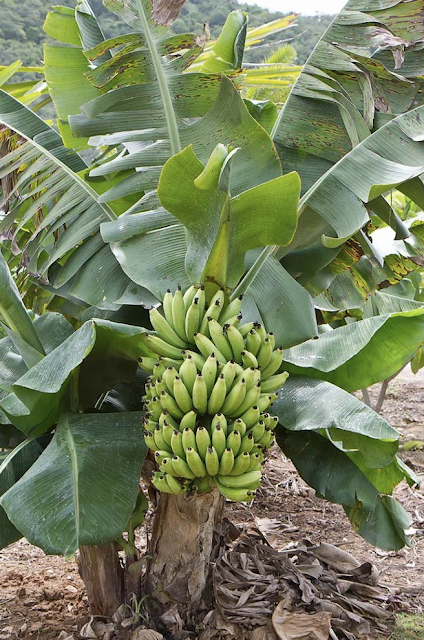
What if instead of dollars we had bananas? It would be obvious who had many and who had few. Those with many would feel awkward, to say the least, to be seen hoarding more bananas than could be eaten. Those with few bananas would naturally be given more bananas, because no one wants to see another go hungry. Money is currency: meant to flow. Like water, it finds its level. It seeks horizontality, not verticality. But when secrecy is enforced, we build dams that don't give a chance for money to flow. Instead it stagnates, pools, gets rancid, while some flood and others die in drought.

I've been rich and I've been poor. For the first 50 years of my life, I experienced financial stability and a middle class or upper middle class life. I walked away from 1.5 million dollars of assets when my marriage ended in 2012. The money felt ill-gotten, a huge karmic load I did not feel capable of processing in a healthy and equitable way. In my very bones, capitalism felt irreparably harmful and an extension of inequity, and I wanted no part of it.

Since 2012, I've lived modestly on very little money, doing what I love, in voluntary simplicity. I practice gift economy, barter, and creative exchange. My motto is "If I won't do it for free, I won't do it for money." I live a life of incredible abundance on about $20,000/year. Liberating myself from wealth has proven to be spiritually liberating as well. I grow food, I forage, I skillshare with friends. I belong to cooperatives. I've learned how to make do, do without, or make my own. I reduce, reuse, recycle, and repurpose. I produce less than one small produce bag of garbage every 2-3 weeks. 

I reluctantly live in a capitalist society. My goal is to find cooperative housing, where I can live in community, have access to a garden, and invest in collective liberation. Meanwhile, I pay $1500 in rent every month for a high-rise apartment, owned by a friend who is willing to receive an amount lower than market rate. To keep a roof over my head I must engage in some capitalist practices. But I am continually striving to move beyond these practices. I encourage those who have more to give more, and for those who have less to take more. As a result I have students who pay me very little, and others who compensate by paying more. 

I will not glorify poverty. I recognize that our class structure requires impoverishment of millions of people, who are suffering and dying because of the restrictions imposed on them. I recognize that my relationship with money comes from a position of privilege, as someone who has always lived with generational financial stability, and who has many non-monetary resources to draw from.

As yoga practitioners, we become more and more sensitive to our own bodies. As this sensitivity develops, we become more sensitive to each other, and to the collective and transgenerational body. We also become more sensitive to other non-human beings: the land, the trees, animals, wind, and water. We cannot help but want to be harmonious with all these beings.

As such, accruing material wealth is counterintuitive and counterproductive. We recognize that the consumption that capitalism requires has been destroying life all around us. We yearn to live in greater balance with other beings, human, and more-than-human.

The same way yogāsana trains me to be in uncertain and uncomfortable positions with calmness and confidence, I have been practicing being comfortable with a low financial threshold. Somehow I always have enough to travel, study, grow, and thrive. Ironically I experienced more scarcity when I had lots of money than I do now, because of the socially conditioned drive to continually protect my assets, and the time and energy this required. Besides, it's all relative. I try to keep about $10k in savings for any needs that may arise, while knowing that for so many, this is an impossibly high threshold, and for others, it's such a pittance it's hardly worth it. 

I renounced almost all my assets when I left my marriage: 2 houses, retirement funds, stocks and bonds.... I could not justify holding onto anything contributing to the bloated militaristic, capitalist, racist patriarchy. Also, I instinctively knew that to be in solidarity with my community, I had to expose myself to the same risks. Water seeks its level. I knew that to build community, I could only be trusted if I allowed currency to flow like water. I also knew that coming into a community with a disproportional level of assets would inevitably create a disproportional, imbalanced level of power and responsibility. I would be perceived as the de facto leader if I held the purse strings, and as a non-Black newcomer to Detroit, where I moved in 2013, I knew this would be deeply problematic. I yearned to contribute to the fabric of community already there, and not to displace anyone or anything. 

This is why cooperatives have not become the dominant organizational structure. Those with material wealth have been deeply conditioned to guard it with their life, to hide it, and to continually grow it, not share it. Those with less material wealth have been conditioned to feel ashamed, and not recognize the value of their largely uncompensated skills.

The opposite of scarcity is not wealth. It's relationships. It's community. I'm wealthy because I have good neighbors. I share my resources with them. I help with dog walks and Costco runs and other errands. Together, we held a grieving ceremony after the Uvalde shooting. I invited them to my Chuseok potluck. I ask them to help me with rides to the airport, borrowing tools, and sharing internet. I'm wealthy because I have flexibility in my schedule that allows me to spend ample time with my children and grandchildren, and to cook and share food. I'm wealthy because I have developed valuable skills as a healer and teacher. 

I'm wealthy because I have experienced material wealth and rejected it. I recognize that it takes a tremendous inner safety net to be able to walk away from money. I also recognize that it's the ultimate power move, because it means you cannot be bought nor sold, and that you exist and thrive beyond the limits of money. I know that I had to experience wealth before I could reject it, and I completely understand why others do not have this relationship with money. I support those who have been intergenerationally and systemically impoverished in accumulating wealth. I had to go through the entire cycle of rich to poor to experience both the creative and destructive power of money.

I am not unique by any means in choosing a life not based on material wealth. I know lots of folks in Detroit who lead revolutionary lives, and have long rejected the trappings of capitalism. They live on cash, have multiple hustles, live in multigenerational households, grow food, look out for their neighbors, belong to co-ops, and share, share share. The way I live has always been the indigenous way, but our lives have been corrupted by the individualistic demands of capitalism.

To be materially poor does not necessarily lead to scarcity and suffering. Finding alternatives to consumerism and capitalism can be incredibly inspiring and empowering. Yes, let's talk about money, whether you have it, and want to use it to disrupt the destructive status quo, or whether you don't have it, but want to live abundantly and joyfully. Stop hiding your bananas. Let the water flow.


Sunday, October 9, 2022

Orland Bishop, Collective Trauma Summit 2022 in conversation with Thomas Hübl

I first came across Orland Bishop when my children were small, at a Waldorf education conference. He embodied a resonance that contained deep wisdom and important messages that penetrated deep into my soul. Ever since then, he has continued to amaze me and take me to new levels of understanding and possibility. This interview moved me so deeply I listened to it several times, and finally sat down with it to take detailed notes. The notes are a way of taking the reflections into my body, to allow them to keep moving and evolving.
 
Started in allopathic medicine at MLK Hospital, the most recognized trauma center in LA in 1980s
- primarily gun violence, looking at physical trauma, not so much psychological
- did fellowship at Franz Fanon Center at hospital, which centered accumulated transgenerational trauma 
    - working on resilience, inner life - what does human being do in face of trauma? 
    - consciousness field which becomes active when something unknown happens - what is soul response to mind/body experience?
 
The inner dialogue makes me a host for my wound
The outer dialogue allows me to engage with someone else who helps to orient me toward a sense of the future
The future is the space between 2 or more human beings that allows us to evolve, a reasoning process for what ails me 
- it wakes me up to my wound, which awakes me to feel a resolve to search something
    - the resolve doesn't close the wound, it's an expansion of the healing consciousness that the wound leads to
The self requires a dialogue with other beings - the genesis pathway
- children who have been exposed to violence, damaged sense of trust which never closes because it is within the "I"- essential being of the self
    - if I can presence my I with theirs, a superconscious dialogue begins

As a child, beginning age 5, I chose to maintain a space beyond my cultural boundaries, beyond what was normal in cultural reality, to stay awake more than usual, because I wanted to see things happening beyond my control, and had an insight about how to live beyond these events
By age 11, I had a way to integrate it into my csns
- how to prepare myself for things others might not be aware of
- what is normal, what is a bit beyond normal that we can go to and come back from

Resilience is an expanding of soul forces into the "perfecting realm" 
- the soul forces come back to rebuild the mind/body relationship
Worked with children - without the expectation that I had to do something with their wounds
- create another kind of attention around them as protection - to protect them from others telling them what to do
    - then the mind will grow into a space, which is freedom
    - this creative act brings them back into a sense of beginning 
        - this gap is not inherited - it's a choice that the human being always carries
            - I work within that choice - eg working with gangs, peacemaking - to 
            - for cellular memory, this epigenetic space is there

How to create environment for own healing to take place?
Africa-gnosis - this gap is an initiation threshold
- between the mind and body is a purpose field in which energy and information accumulate, a feeling for other possibilities
    - separates person from what they know, put them into an experience in which energy gets released, in touch with archetypal/ancestral/prophetic world
    - releases body into a quantum development
    - indigenous knowledge puts person outside of time and body
        - cellular memory/mitochondria carries this knowledge
        - when I don't know what's happening, I contract - must trust the elder, who holds the string for maturation for forward development     
    - in western tradition we protect what we know - I only know my body, I really don't know my mind
        - my body memory tells me I am here, who I am, why I'm here - this is how we operate
            - this can be traumatic, when I don't know what else to do, because my knowledge doesn't give me this threshold
My work has been to go to indigenous traditions to know how this threshold works, and be able to guide others - to go a little bit beyond the normal range of what we know
    - we know this as the transition from waking to sleeping, at point of death etc
 
 At age 7, fell into a hole into water - body suspended breathing and something else awoke - observing self in water but no water in lungs
    - realized this was part of African tradition
    - sense perception expanded, intuitional space awakened, became clairvoyant
    - an initiation without a guide, except ancestors
    - later invited to South Africa with _______ to practice Indaba 
        - learned about me through other dimensions
    - then in Burkina Faso with Malidoma and Sonbofu Somé in Dagara tradition for ritual work
         
Deep dialogue work - With whom do you need to speak in order for your story to become true?
Indaba tradition - first level is to tell the story (personal or initiatory) 
- wakes up the energy that reveals what is to be known 
- awakens archetypal forces
- what is it to be known? what is my body to become? to ask the other or to ask self
    - this is what's most important in the tradition of dialogue
- we've forgotten that the mind is the witnessing space for dialogue
    - we have come to depend on intellect instead
    - we need to know not just the content of our lives but the purpose of our interaction - by giving attention to the energy to be reminded that there is something I don't know I know
        - this phenomena activates the 5 generations of ancestral memory which is in the body
            - 2 peoples' stories are trying to break out of the pattern that will keep me in my historical inheritances, and create a chemistry for a more self-conscious effect
            - dialogue not based on intellect but on energy
This energy catalyzes profound inspiration and aspiration of the will to move to the intuitive level, and this is where true dialogue begins
- I can ask a question about the future which is not in the content of my own life
    - put into my own energy processes higher forces of creativity to move to the prophetic realm, beyond the inspirational level
        - so you and I can go somewhere together if we build the energy field appropriate for a superconscious realm to emerge

Building different, higher levels of resonance together
Sau bona - we see you - the intelligences emerging from our agreement becomes a shared reality - the prophetic realm - beyond the ancestral world to the archetypal and higher worlds of creation

When I look at you, you live in me and I live in you - because we are happening in each other's nervous systems - intraconnected
- if we can pay attention to that resonance, we are pulling in a mutual future that exceeds what we know separately - new space being created

What if I can't see you? cannot resonate with you?
- our sensitivity forces are conditioned by csns of mind - which is mostly sympathy and antipathy
    - we learn preferences which become prejudices - we push back on things we don't understand
        - initiation requires going into unknown - if we knew what our initiation would look like, we would reject it - we resist transformation, we like the forming of knowledge that meets my self-interest and self-feeling
            - we protect ourselves from change, including allowing someone else's cognizable mind to come into me

The heart forces create empathy, another kind of feeling - a feeling for the other more so than self
-  RW Emerson: "There's a power in love to divine another's destiny, better than that other can, and with heroic encouragements, hold him to his task."
    - when my heart forces recognizes another's energy field, I become a host for the future that is trying to live into their own being
- this feeling of empathy substitutes their own feeling of antipathy, because it goes beyond the choice point of my sense perception
            - cognitive free forces go to another's without any judgment
            - catalytic memory starts to grow - creating sanctuary for the other - freedom from judgment of any kind, including needing to know their story
- the story I am interested in is the future story - need shared purpose for the memory, just hearing about their wounds does nothing for either of us
     - the future contextualizes the past
     - this kind of attention generates freedom for the other
 
An open free space that can invite transformation which has the power to overcome separation and to alchemize a new mutual space
We become together, incarnate into the self, a maturing of the will
The other person is protected from losing touch with their security - must enhance their security by telling them they are free
- most people cannot feel it just out of the mind - they need someone else to host a level of their own freedom
    - we can tell when we are in a nonjudgmental space through our sense perception

An immense struggle to fill in the space with the heart forces
- worked with young man diagnosed with schizophrenia after drug-induced psychosis
    - spent 20 hours/day for 2 weeks, only witnessing, not diagnosing, until he could recognize me
    - communicated an agreement to leave "here" - to move into another state where extrasensory perception could be normalized, and a new chemistry of boundaries could be created
        - took 2 months to bring chemistry back into range of mutual reality
            - when psychiatrists would come into the room, he would re-enter psychosis - that projection of knowledge transferred again
                    - when they left, he would engage in normal range
            - invited him to choose which reality he preferred - he chose reality in which he could converse with me
Our minds are always trying to figure out who is the host for the reality in which more freedom can come 
- instead of battling, we liberate the creative forces and allow the soul to choose, because soul knows more than the mind what and when a purpose should be fulfilled
    - we don't choose the place to be but we choose the time to be
        - boundaries of other realities close when we choose
        - we are continually choosing our futures - we just don't believe in them strong enough for them to fulfill the other states of being
 
Quality, fluidity of our inner space spacious enough to hold societal issues
- if we can hold this space it can have a big transformational impact - how is this done?
The space of our relationships - depends on timing
- timing is the first element for transmutation of personality and trauma so that body generates a new beginning
- how to get the mind to surrender to its beginning?
    - eg child speaks in third person because they don't yet have sense of self, body is not yet connected to I 
        - soul force needed to mature child to incarnate into own body
- our truth is hidden in language, grammar, perception, and cognitive stages such that I choose which time-body to live in
    - I could choose to live in the ancestral/inherited realm, or I could choose to live in a state of transmutation
        - have to be willing to change my personality - I have to become another conscious being in order to allow my energy to evolve into creativity

Henrietta Lacks - blood was transmuted, cell became immortal - her life is distributed into other forms, every lab, for future of human medicine
- transmuted self in ways that don't make sense in biological time, only in spiritual time
    - what it means to vacate memory from the body that allows it to become a host for time-forces, where it's always NOW
        - a constant pure life field in the cell, maintaining pure equilibrium free of trauma

Sacred hospitality - in this time, a phenomena is trying to enter our lives
- if we could choose an agreement that is energetically appropriate for trust, this event will happen
    - metamorphosis of the given - the given is anything I carry in my perception or cognition to which I give attention
        - my attention is a spiritual activity that creates a space between you and me to go through a metamorphosis
            - I give my attention because it heals me when I give it, and heals you when you receive it
                - it can move between us to higher levels of creativity - can go into the unconscious, superconscious 
 - the movement of energy without any content, to ask what are you willing to be if freedom is given?
      - to give attention without asking for anything back, so that the person can choose what they give back
      - if they reciprocate with attention, becomes a communion of soul forces that allows the mind to receive something
 
We become the future download for each other
- healing alchemical quality which affects trauma stored in us, eg fragmented past or storage of information that is frozen
    - a mutual anchoring in the future which allows us to move into a new version of ourselves
 
To put energy and cognitive feeling of truth into words - coming from heart as creative force, prioritizing other's future
- a vessel for what is trying to begin in pure attentiveness - stepping out of the past into the present phenomena of feeling of trust - this space is between us
 
A traumatic event creates a chunk of the past which is shut down and held in nervous system, and creates a mirror future in nervous system, which is an escape of the real future
- healing allows for a reintegration which allows us to move into the real future
    - we open the space for one another
         - we don't want to be in the future by ourselves! the dialogue space/language structure allows us to ask who else agrees with what I know to be true
            - we can expand what we know to include levels of agreement we have not yet lived
Indaba - cognitive steps toward higher agreement possible in superconscious, not yet mapped
- civilization has to choose what has to be transformed in our ways of life
    - eg climate change requires different choices about environment
        - initiation requires we need to give up something - content of our csns - we don't want to do this because we think we will lose ourself
            - healing is most profound when I choose to be the knower but not the knowledge

Collective csns field has reached its limit of what knowledge through the intellect can do
- collective trauma body in the world and its fear is the result of our knowledge
    - we need to choose now to leave it - our knowledge cannot complete the next step going into the superconscious field
- our astral body has an electromagnetic force that unites us as a global csns being
    - our belief structures are held in common, esp regarding money
    - we hold the threshold for an initiation into the superconscious phenomena, which includes our environment at a much higher level
 - when we sleep our environment is different - we give up our csns field that limits us, through our chemistry, that our waking life elicits from us
    - sense perception is feeling, and so is our environment
        - our fears are resonating in a field that is causing storms - we were asleep to the phenomena of our own human psyche
            - our psyche has to choose another level of integrity through soul force, not the mind
            - we must choose a true genesis power, through love, in which something new can happen
            - it starts with each other - we cannot change the environment without changing how we relate to each other
            - we are the progenitors for integrity within environment - an initiatory threshold

Environment is reflective of the inner calm and choices we can make
- nature is so intelligent that it will reveal more of itself if we can resolve the inner conflict
    - ie we don't want to share the world - collective trauma and the world future is the same

Sharing world, not just resources - shared space becomes fuel for liberation
Leading edge is climate change - light forces in our astral csns get to be homolumous state - cognitive social memory, a psychic space to go into deeper dreaming
    - wake up from sleep into a new reality, a new chemistry
        - this sleeping/waking rhythm is important for the evolution of csns to the collective super conscious
        - witness insights and intuitions not projections for what can come into the world


Wednesday, May 18, 2022

Sacred Surrender: Thoughts on Roe v. Wade, the more-than-human, and the continuity of life

 
Grandkids napping, 2021

My Korean immigrant mother told me only one thing about sex: “We don’t believe in abortion.”

It was the 1970s. She had recently been diagnosed with an autoimmune condition, myasthenia gravis. Chondoso-halmoni (“Evangelizing Grandma”) came and stayed with us while Mommy recovered from major surgery in which the doctors foolishly and violently removed her thymus gland, mistakenly thinking it was the culprit to her weakened condition. All her life thus far, my mother was a rather lukewarm second generation Christian socialized with Confucian values. But in her vulnerable, post-surgical state, Chondoso-halmoni—not our real grandma, but a community grandma, eternally old but unreasonably spry—turned Mommy into a repenting, born-again, Pentecostal Christian.

I would never begrudge Mom or anyone else their redemption. But every redemption has its price, and in order to feel in the right, others have to be in the wrong. So I must have been wrong, terribly wrong, in 1984, a junior in college, to find myself pregnant.

My body blossomed into pregnancy within weeks, as if it had been waiting for just this moment. I felt bloated, nauseous, terrified, but I couldn’t help entertaining the notion of keeping this baby—that’s how much my hormones had already begun taking over. I went so far as to write a letter to my parents on my manual typewriter, explaining the situation and my decision to become a young mother and postpone my senior year of college. A letter I never sent.

In my 12th week of pregnancy, I finally committed to terminating the pregnancy. I was drowning in guilt, remorse, and shame, but I was resolved. I would go on with my life. I would finish school. I was in a relationship, but I would let it take its time, and not let it be shaped by an unplanned child while we were so young. The doctor at the clinic was a brusque, impersonal Korean man. He exuded no judgement, but I couldn’t help feeling guilty and sinful. I asked him what was the baby’s sex? And he scoffed and said, “It’s not a baby.”

Nevertheless I felt I had taken a life. In my short pregnancy I had strangely experienced a budding relationship with this being that I was carrying. Politically I was, and continue to be, staunchly pro-choice and a feminist. But in my soul I experienced a severance and a deep sadness.

I buried my sadness and proceeded with my studies. I won a writing award, and created a volume of poetry as my senior thesis. I told next to no one about my secret loss. I went on with my life.

Maybe partially in response to my unresolved grief, I married early, at age 21, with my 25 year-old partner, took myself off birth control pills, and found myself pregnant once again almost immediately. Apparently my body longed to be pregnant, over and over again, like my basil plants that bolt within weeks, continually flowering and seeding. This time I knew I would keep the baby.

I dove into motherhood and zealously embraced natural childbirth, breastfeeding, family bed and more. Motherhood radicalized me and awakened me to my own power. Becoming Meiko’s mother grounded me and gave me an undeniable sense of purpose and joy.

As soon as Meiko began talking, she started referring to her big brother, Suki. Suki this and Suki that, we heard story after story about Suki. This went on for several years. It finally ended when she surprised herself by finding a photo of Suki, her imaginary brother, in the basement of my parents’ Korean Church in Buffalo, New York.

“Look!” she said, startled. “There’s Suki.” She pointed to a boy in one of the family photos lining the walls of the church. He looked about 8 or 9, standing with his family. Meiko was maybe 4 or 5 at this time.

“Oh, wow,” her dad and I said, humoring her, as surprised as she was. We went on with our day, Meiko grew older, and Suki faded away. But for those years, Suki was a presence in our family, and in Meiko’s toddler life. It doesn’t matter whether we regard an imaginary sibling or friend as an angel, a ghost, a projection of a mother’s guilt, or simply a product of a child’s imagination. I also embraced Suki, and some non-logical part of me even regarded Suki as my own.

This is how I would describe my pregnancy and decision to end it:
A being came into my life. After careful consideration, I declined to admit this being to fully manifest in my body. In the triangle of me, God, and this being, I stepped forward and said, no, not now. And released this spirit back into the ineffable cosmos.

Once I departed from conventional Christian notions of heaven and hell, the spheres of spirit revealed themselves, and I recognized the unstoppable pulse of life everywhere. Once I shifted the lens from the human point of view to the more-than-human perspective, I realized that life reveals itself through all forms, including the wind, water, trees, art, and sometimes even the seemingly mundane.

When does life begin? An impossible question, because when does life end? My answer is never.

After Meiko, I gave birth 2 more times, to Katja, and her brother, Malachi. I experienced yet another pregnancy, when Malachi was 2 years old. Once again, I found myself struggling with how to relate to this being. Once again, I was caught off-guard. I felt complete with our 3 kids, and up to my ears in responsibilities, with barely enough time to care for myself, do any writing, or even rest.

This time I did share my concerns with a few trusted friends, and eventually decided, yet again, to terminate the pregnancy. This decision pained me, possibly even more than the first time 9 years prior, because I never thought I would have to do it again. A friend accompanied me to my second abortion, and we walked through a phalanx of protestors at dawn. She held me while I cried when it was all over. Just because we commit to a course of action doesn’t mean we don’t grieve our losses. And just because I am grieving does not mean I made a wrong decision. I can be sad but not regretful.

What is right and what is wrong? Life doesn’t operate in binaries. We live in the “yes, and.” We muddle through the contradictions and complexities. We do the best we can in any given moment. Why would we do any less?

I released another being from my body, so that I could care for the 3 I gave birth to, with a modicum of energy left for myself. It was a profound and difficult act of self-care and self-love.

BKS Iyengar observed, “Most people want to take joy without suffering. I will take both.” I, too, refuse to go through life trying to avoid suffering. Especially as mothers, we understand somatically that we contain both joy and suffering, both life and death, and that we must accept both. Pregnancy and childbirth themselves teach us this with magnificence, no holds barred.

With each pregnancy, I realized that I was not a one-way channel, but that I was in relationship. As such, each agent practices sovereignty. We practice consent and dialogue. We are in circle with one another. Each party can decline to proceed at any time.

I also realized that I am part of an ecosystem, a collective, a network of realms and beings, and that closing one door allows another door to open. We each extend beyond our individuality, and belong to collectives of consciousness.

Shortly after my second abortion, my 2 year-old son, Malachi, woke up in the middle of the night crying. He wasn’t crying out of a physical need. “Baby,” he cried, “babeeeee.” He pulled me out of bed and took me into the playroom next door. He dug through the basket of dolls and finally pulled out the “fetus doll.” I was a natural childbirth teacher, and I had a model pelvis and model fetus doll, the size of a newborn human baby, with a cloth body and plastic head that the children loved to play with. He tearfully clutched the doll and we went back to bed.

It’s easy to speculate and impossible to have firm answers, but I know that strongly in that moment, I felt the spirit of the child I released present in our own family. Who knows what dream Malachi awakened from that night? Who knows why he wept for the baby? What baby? Or whether he was picking up on my grief, tasting it through my breastmilk? We exist in constellations, we feel each other nonverbally. We cry together, we experience both joys and losses together.

As Malachi became more verbal, he, like Meiko, referred constantly to his imaginary siblings. He had 3 brothers, Michael, Jonathan, and believe it or not, Goofy, who went on all kinds of adventures, and even died and revived. Our family, like all others, was a menagerie of beings and characters encompassing all levels of reality from the concrete physical to the imaginary invisible. I choose to let the mystery be, and embrace the weirdness and wildness of all possible life forms.

Once I was in conversation with a young woman, who described herself as firmly Democrat in her political views, except for the issue of choice. She explained that because she was adopted, she was anti-abortion, because she would not be here today if her biological mother had aborted her. The observation struck me as peculiarly Western, in its individualism, as if her personal existence was in and of itself a victory.

On the other hand, I’m inclined to say, although I did not at the time: So what if you were never born? You would just take form another time, another place. Is our uniqueness that precious? Is your current life that perfect that you refuse to imagine another embodiment?

Animism teaches me to be less precious, both about myself and other beings. It’s about the complexity of relationships rather than mere transactionality.

Here in Honolulu, I discovered a grove of several mature, incredibly abundant mango trees. They are in an old cemetery from the early 20th century. At first I hesitated to take the fallen fruit at the risk of being offensive. But the trees, heavy with fruit, implored us to partake, and alleviate their burden. After all, the only reason they produce fruit is to propagate themselves. So now I visit the trees often, leaving flowers, stones, and tokens at gravesites, tidying up and gleaning.

For many years, I was vegetarian. But I returned to being  an omnivore when I realized I was not keeping up with my nutritional needs. I had not found it possible to adequately nourish myself without being in relationship with other animal beings. Vegans must be in relationship with plant beings, and be willing to sacrifice them to meet their own survival needs. Omnivores choose to be in relationship with both plant and animal beings. To some extent, we take on one another’s karma. I recognize my hands are not innocent, and that to live, I require the sacrifice of other lives. One might argue that veganism emerges from an anthropocentric view, and that once we remove humans from the top of the power pyramid, we recognize that we live as kin with plants, other animals, fungi, bacteria, viruses, and the elements.

The peninsula of Korea is 75% mountains. While living there in 2014, I realized that the mountains, like humans, are constantly moving, changing, and shifting as living beings, but so slowly that it’s mostly undetectable to human senses. I’m talking not only about the obvious surface vegetation and animal life, but also the deep stony foundations. 1 day to a human being might be like 1 year to a mountain. The mountainous islands of Hawai`i where I now live remind me of this daily.

Why do we refuse to grant sovereignty to the more-than-human, while some insist on giving rights to unborn humans? Has Christianity convinced people that humans indeed sit atop a hierarchy, to assert dominion?

Or are we willing to consider, for instance, Elder Malidoma Somé’s description of his Dagara cosmology, in which trees are the wisest, highest beings, animals second, and humans third? Why do we easily choose to kill trees in order to build a house, yet harshly judge a woman who sacrifices an unborn human with whom she shares her body?

Every sacrifice—a sacred surrender, letting go, renunciation—is highly personal and intimate. I suggest our current debate over Roe v. Wade indicates we need to reinvigorate ritual and spiritual practices into our everyday lives. Why do many cultures pray before eating? Because we universally perceive that eating requires sacrifice, and that for our own bodies to survive, other beings had to lose their lives.

We understand that the energy from eating gets recycled, through our bodies, as we fuel our activities, and create waste, that then, if we complete the loop, goes back into the earth to provide nitrogen for plants. I hope that when it’s time for me to leave my earthly body, I can be consumed by creatures so that I am giving back to the earth all that has supported me through the decades.

The Roe v. Wade debate indicates that we live in a death-phobic society. When we see death as a one-way road, with a destination determined by our goodness or repentance, it definitely can be terrifying. But I see death as a transition from one form into another. We will each give up our physical presence as we return to the earth, wind, and waters, and shift into spiritual presence, as stories, memories, dreams, and more. From a yogic perspective, we eventually reincarnate, and come back into an earthly form to try again, to learn the lessons our spirits long for.

Yes, we grieve. Death rends the hearts of the living. We miss our dearly departed. We long for their physical presence. We lose too many too early due to war, genocide, disease, injustice, and inequality. We fight to change these conditions, while learning to accept the losses when we cannot prevent them. Grieving is a continuation of loving. Reinvigorating ritual and spiritual practices must include deep, daily grieving. Our capacity to grieve expands our emotional range, and our capacity for joy and pleasure. The goal of life is not to avoid death, suffering, and loss. We came here, I believe, to learn, grow, mature, evolve, and, hate to say, our hardships are sometimes our greatest teachers.

My first intimate experience of death was the sudden loss of my older brother, John, when I was 24 years old, and he was 25. The event devastated me and my family, especially my mother. We don’t necessarily recover from huge losses like this. But his death opened a door for me, as a young woman, to come to terms and begin to accept the inevitability of death, and start to understand death in more nuanced ways than mainstream culture and religion taught. Later, in my 30s, I accompanied each of my parents through their death journeys. In my 40s and 50s, I had the privilege of being present with friends and mentors through their dying processes. Each of these experiences, as well as my abortion experiences, broke me open, so that I could receive profound teachings, about what it meant to be alive, in this body, in this time and place, in relationship with all other beings—human, more-than-human, embodied, and disembodied.

Let us live into the complexities and contradictions. Let’s not police each other’s bodies. Let’s cradle, nurture, and cherish all life, realizing that life neither begins nor ends with the physical body. Let’s be present with each other, and hold each other in our grief. Let’s enter the wells of grief willingly and deeply. Let’s celebrate the stunningly beautiful temporality that gives us joy and pleasure: our bodies, our human loved ones, the waters, mountains, stars, moons, planets, the winds, the stones, songs, art, our plant and animal kindred, and so so so much more. May it be so.